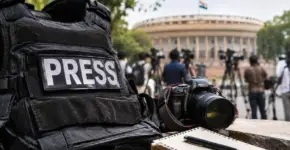
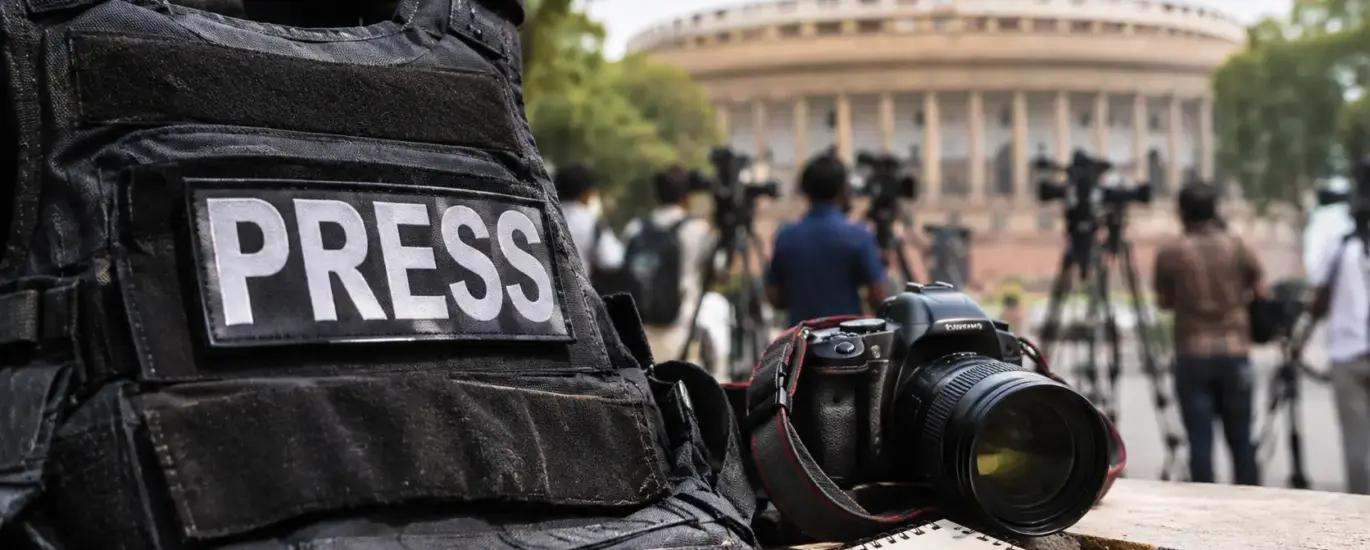
India observes National Press Day every year on 16 November to recognise the importance of a free and responsible press and its contribution to democratic governance.
The day commemorates the establishment of the Press Council of India (PCI), which formally began functioning on 16 November 1966. The Council was created to preserve the freedom of the press and maintain and improve the standards of journalism in India.
National Press Day is more than a commemorative occasion. It is an opportunity to reflect on the responsibilities of journalists, the independence of media institutions and the fundamental right of citizens to receive accurate and reliable information.
India, home to approximately 1.4 billion people, has one of the world’s largest and most diverse media industries. Its newspapers, television networks, digital publications and independent journalists play an essential role in informing citizens and holding institutions accountable.
However, the expansion of media platforms has not necessarily translated into greater editorial independence.
Since Prime Minister Narendra Modi and the Bharatiya Janata Party (BJP) came to power in 2014, concerns have intensified over political influence, corporate ownership, online intimidation and legal action against journalists. Independent media organisations and international press freedom groups have repeatedly raised questions about the environment in which critical journalism operates.
The issue is particularly important because a democratic society depends not only on elections but also on access to reliable information, transparent institutions and the freedom to question those exercising public power.
A FREE PRESS: THE FOURTH PILLAR OF DEMOCRACY
The media plays an indispensable role in democratic societies. It informs citizens, questions public authorities, exposes corruption, highlights social inequalities and provides a platform for diverse opinions.
In a country as diverse as India, with its numerous languages, cultures, religions and communities, independent journalism is particularly important. Newspapers, television channels, radio stations and digital news platforms connect citizens with developments across the country and the wider world.
A strong press does not simply report government announcements. It examines public policies, investigates decisions, questions institutions and ensures that those exercising power remain accountable.
Democracy becomes stronger when journalists are free to ask difficult questions and citizens have access to different perspectives.
THE CHALLENGES FACING INDIAN JOURNALISM
Despite India’s extensive media landscape, journalism faces several challenges, including political pressure, corporate influence, misinformation, online harassment and concerns over the safety of reporters.
The 2026 World Press Freedom Index published by Reporters Without Borders (RSF) placed India at 157th among 180 countries, compared with 151st in 2025.
The ranking has renewed international debate about media independence, journalist safety and the legal and economic conditions affecting independent reporting.
Journalists covering sensitive political developments, communal tensions, corruption, human rights violations and public protests can face intimidation, threats and legal challenges.
The concentration of media ownership among powerful corporate groups has also raised questions about editorial independence and the diversity of viewpoints available to the public.
These concerns should encourage serious discussion about strengthening the institutions that protect independent journalism.
UNITED NATIONS: FREEDOM OF EXPRESSION IS A HUMAN RIGHT
The importance of press freedom extends beyond national boundaries. It is recognised as a fundamental human right under international law.
Article 19 of the Universal Declaration of Human Rights protects the right to freedom of opinion and expression, including the freedom to seek, receive and impart information and ideas through any media.
The International Covenant on Civil and Political Rights also protects freedom of expression under Article 19.
The United Nations has repeatedly emphasised that journalists must be able to perform their professional duties without threats, violence, intimidation or arbitrary detention.
Through its Plan of Action on the Safety of Journalists and the Issue of Impunity, launched in 2012, the UN promotes prevention, protection and prosecution as essential measures for creating a safe environment for media professionals.
UNESCO also monitors journalist killings and advocates stronger accountability for crimes committed against media workers.
These principles establish that protecting journalists is not merely a professional concern; it is an essential responsibility connected to democracy, human rights and the rule of law.
THE DIGITAL REVOLUTION AND THE RESPONSIBILITY OF JOURNALISTS
The transformation of the media landscape has created extraordinary opportunities for journalism.
Social media, independent digital publications, podcasts and online broadcasting have enabled information to reach millions of people within seconds. Journalists can now report from remote locations, connect with international audiences and bring previously overlooked issues into public discussion.
However, the digital revolution has also introduced serious challenges.
Fake news, manipulated photographs, artificial intelligence-generated content, misleading headlines and coordinated disinformation campaigns can damage public trust and deepen social divisions.
In this environment, responsible journalism requires fact-checking, source verification, transparency and professional ethics.
Speed should never replace accuracy, and popularity should never become more important than truth.
WOMEN JOURNALISTS AND THE PROTECTION OF MEDIA PROFESSIONALS
Women journalists and reporters from marginalised communities continue to face particular challenges, including online abuse, threats, discrimination and barriers to professional advancement.
A genuinely independent press must ensure equal opportunities, safe working environments and meaningful representation across editorial and leadership positions.
Journalists should be protected regardless of their political views, gender, religion, language, nationality or the subjects they investigate.
Attacks against journalists are ultimately attacks against society’s right to information.
THE ROLE OF THE PRESS COUNCIL OF INDIA
The Press Council of India plays an important role in maintaining the independence and ethical standards of the print media.
Established under the Press Council Act, 1965, the institution functions as a statutory, quasi-judicial body. Its responsibilities include preserving press freedom and maintaining and improving the standards of newspapers and news agencies.
Its role is particularly important in an era when public trust in media institutions is influenced by political polarisation, sensationalism and the rapid circulation of unverified information.
The Council’s mandate reinforces an important principle: freedom of the press must be accompanied by responsibility, accuracy, fairness and accountability.